
Best-Case Scenario Digital Patient Education Digital Patient History

Medical History and patient information at Home: Easing the Burden on Hospitals and Patients

Patients and staff at the RHÖN-KLINIKUM in Frankfurt (Oder) benefit from a modern, digitally supported process for providing information and taking medical histories. Julian Schäfer and Dr. Bernhard Flasch, who played a key role in driving this groundbreaking pilot project forward, report on its goals, challenges, and results.

In diesem Artikel lesen Sie:

    Relief for the Hospital and Patients

    While having breakfast on his balcony at home, the patient picks up his smartphone. He opens the E-ConsentPro Patient app via a link in an email. There, he finds all the informational materials for his upcoming hip surgery. He goes through them at his own pace. Then he taps “Start Medical History Questionnaire.” His wife tells him the name of a medication he had forgotten. He fills out the rest of the questions on his own. He takes his time doing so — and then taps “Send.” Well in advance of the scheduled procedure, the surgeon now has the opportunity to prepare for the preoperative consultation and the subsequent surgery based on the patient’s self-reported medical history.

    Informed consent and medical history collection during patient onboarding can be this simple, stress-free, and flexible when patients can view and edit the relevant documents on their own smartphone, tablet, or computer at any time and from any location. RHÖN-KLINIKUM AG is enthusiastic about this idea — and implemented it in collaboration with the Erlangen-based solution provider Thieme Compliance: “Digital informed consent and medical history collection, independent of time and location, is another building block in our digitalization strategy. In discussions with patients and staff, we’ve determined that there is a need for this,” explains Julian Schäfer, who is overseeing the project as Team Leader for Medical Systems & eHealth at RHÖN-KLINIKUM IT Service GmbH.
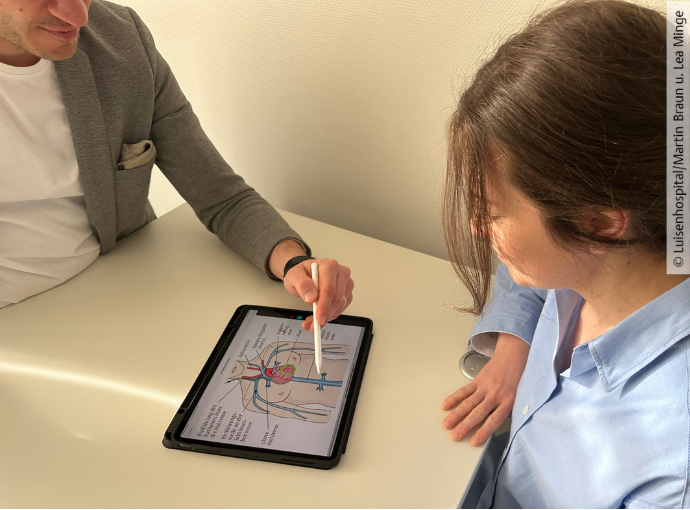
    Patients benefit from being familiar with their own devices and their home environment.
    Julian Schäfer Team Leader, Medical Systems & eHealth, RHÖN-KLINIKUM IT Service GmbH

    Optimize Processes

    What specific benefits did those in charge anticipate? “In select departments, we’re already providing our patients with digital and mobile information right here in the hospital. Patients fill out the medical history and informed consent forms on a tablet, which the doctor can view digitally even before the consultation. By using the E-ConsentPro mobile software, we’re streamlining our internal processes,” says Schäfer.

    E-ConsentPro Patient offers additional benefits for both the clinic and the patient. “Medical staff can conduct the informed consent discussion in a more focused manner, since patients are able to prepare for it in advance. In addition, patients benefit from being familiar with their own devices and their home environment,” explains Schäfer. If there are any unanswered questions, family members can help, or patients can consult their medication schedule or medicine cabinet. Patients come to the clinic only for the mandatory preliminary consultation with the doctor.

    Furthermore, the app allows users to play videos as part of the informational process. “In the comfort of their own homes, users can watch videos at their leisure without disturbing others — as they might in a waiting room.” At home, it’s also possible to explore the procedure in depth without time pressure, prepare any questions that arise, and bring them to the face-to-face information consultation. In addition, this approach circumvents the hygiene concerns associated with the use and sharing of headphones in a clinical setting,” explains Dr. Bernhard Flasch, Head of Clinical Process Management, Digital Transformation, and Corporate and Organizational Development at RHÖN-KLINIKUM AG.

    Ensure Data Protection

    For the project, the first step was to assess technical feasibility and set up a test system. At the same time, the participants focused on data protection. “With a cloud solution involving an external IT company, the secure processing of patient data must be carefully reviewed. Together with Thieme, we discussed our requirements and took all necessary technical and organizational precautions,” explains Schäfer.

    This includes the requirement that the cloud service provider Azure must host data exclusively in Germany and that patient data in the cloud must be encrypted by the customer. This ensures that the cloud provider has no access. Patients can access their data via two-factor authentication. In this process, a link to the informed consent and medical history form is sent via email, along with an access code via text message to open that link. The project team led by Julian Schäfer and Bernhard Flasch ultimately defined the workflow through in-depth discussions with hospital staff and experts from Thieme Compliance.

    We will continue to actively support RHÖN-KLINIKUM AG in its plans to operate in a smarter and more holistic manner.
    Christoph Müßig Sales Solution Manager, Thieme Compliance

    Pilot Project Launched

    For the pilot project, the organizers selected the RHÖN-KLINIKUM Health Campus in Frankfurt (Oder). “Up until now, we had been using the traditional paper-based workflow here. We gradually introduced in-hospital mobile patient information via tablet and at-home patient information using patients’ own devices. This allowed us to coordinate all technical innovations without disrupting ongoing processes,” says Schäfer.

    The pilot phase began in October 2022 in the departments of Anesthesiology and Trauma Surgery. “In these two departments, we were able to get the project up and running the fastest and with the most promise. The staff were open to the idea and enthusiastic. In addition, the patients are relatively young and tech-savvy,” say Flasch and Schäfer. Nevertheless, patients are given the option to receive information via a hospital tablet or a paper form in addition to their own device, since some patients do not own a compatible device or do not wish to provide their email address or cell phone number.

    The amount of time remaining until the medical procedure also affects whether the new solution will be used. “If there are only one or two days until the surgery, it doesn’t make sense to send the documents ‘home.’ The patient information session is then usually conducted immediately after admission. In this case, our staff offers to send the documents to the patient’s device right there at the hospital,” explains Schäfer.

    Author: Dr. André Gärisch
    Freelance writer working on behalf of Thieme Communications

    At a Glance: Frankfurt (Oder) Hospital

    Klinikum Frankfurt (Oder) GmbH, a subsidiary of RHÖN-KLINIKUM AG, provides supraregional specialized care in eastern Brandenburg. With nearly 1,700 employees, the hospital is one of the largest employers in the region. The hospital has 775 beds, 24 specialized departments, and 6 institutes. The Health Campus grounds also house a medical care center, day clinics, and a nursing school; additional locations include psychiatric outpatient clinics, a social pediatrics center, and further day clinics. The Frankfurt (Oder) Hospital is an academic teaching hospital affiliated with the Charité.

    Frequently Asked Questions and Answers

    What is the digital recording process, and why was it introduced?

    Patients experience a more structured and pleasant check-in process, while staff benefit from less paperwork, fewer errors, and more efficient processes. This also leaves more time for personalized care.

    What benefits does digitization offer patients and employees?

    Patients experience a more structured and pleasant check-in process, while staff benefit from less paperwork, fewer errors, and more efficient processes. In addition, there is more time for personalized support.

    You have questions — we'll find a solution that fits your facility.

    Whether it’s patient admission, medical history, or patient information: Our experts provide personalized advice and show you how to design processes at your clinic that are safe, efficient, and patient-centered. Together, we’ll find the approach that best meets your needs.